
Just Back: Malaysia (Kuala Lumpur & Ipoh)
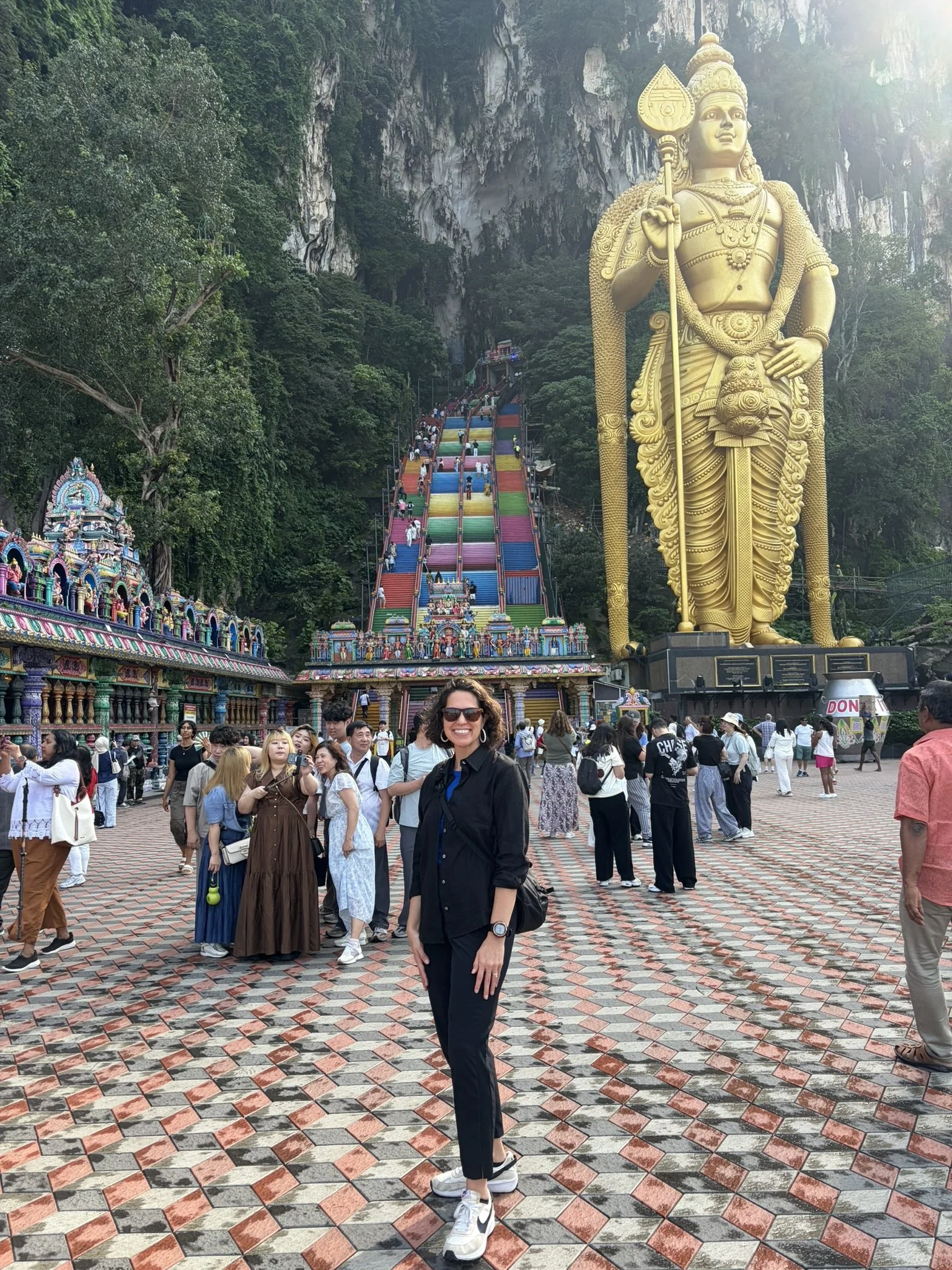
Visting Batu Caves
I don’t know if it was the faint smell of lemongrass or the hint of durian in the air, but I knew I was back in Southeast Asia.
Or maybe it was the incredible humidity, the thick air and hot sun bearing down on me as I ventured out of my hotel in Kuala Lumpur to the nearby 7-11 for a cash withdrawal.
I was glad to be back. It has been so long and yet felt like only yesterday that I was trekking around the region on my own. But this trip would be different, a chance to have a more luxurious experience in SEA and to learn more about what makes Malaysia a destination worth traveling to.
It’s not easy getting to SEA which is why so many Americans skip it in favor of easier to reach vacation spots. I totally get it. After 24 hours of flying, I was ready to be in my hotel bed. I flew direct from Atlanta to Seoul (15.5 hours), had a short layover in Seoul, then another 6 hours to KL. When I walked out to the gate area, I was met by a friendly stranger holding a sign with my name on it - and I was quickly whisked away to a golf cart for a speedy ride through the terminal to the Customs & Entry area. We offer VIP Meet & Greet services to many of our clients traveling abroad and this is why: after traveling for nearly 30 hours, I didn’t want to think about where to go or what to do. Besides, I was tired and the Fast Track service is exactly that. I was out of the airport in under 30 minutes (no checked bags, another win) and on my way to my hotel.
FAM trips generally have very packed itineraries with many hotel visits, touring, and not a lot of downtime. This itinerary, with EXO Travel, one of our preferred Asia partners, was no exception. Our itinerary followed the natural route for a first-time Malaysia visit and main highlights (not including Borneo which could be added to this itinerary or a separate trip).
We started with a few nights in Kuala Lumpur, the capital of Malaysia and a city most famous for its very tall buildings (it is home to 3 of the 4 world’s tallest buildings). This is a natural starting point for most travelers into Malaysia, and KL is easy to get to from the main Asia hubs or via Middle Eastern hubs (maybe not the preferred route right now). From KL we traveled on to Ipoh, followed by Penang, and finally flew to the island of Langkawi. If you end your trip in Langkawi, it’s easy to fly back to KL or to Singapore for the next leg of your journey.
Kuala Lumpur
Kuala Lumpur is a big and busy city. If you like visiting big cities, you will love KL. It’s hot, but there are AC-filled malls everywhere. Take a Grab (Asia’s version of Uber) and zip around the city to sample from its various restaurants or take in the mix of old and new that you will find on every street. Malaysia’s mix of Chinese, Malay, and Indian ethnicities means that there is an abundance of great food, much of which combines the various flavors into something distinctly Malaysian. It is impossible to go hungry here.
Our full day of touring KL was a mix of seeing Chinese and Hindu temples (as well as a mosque we quickly drove by but decided we were too hot to visit). Malaysia is a Muslim country, though there are many religions practiced here. We also saw the King’s palace, strolled through busy Chinatown market stalls, and had cocktails with a view of the impressive Merdeka tower (building #2 in the world).
Before leaving KL and traveling north to Ipoh, we made our way to the Batu Caves, a quite famous site known for its 140ft statue of the Hindu god Marugan and its colorful yet steep steps to the top (272 in total). Approaching the caves is quite something - it wasn’t too busy when we arrived and we were able to take in the full view before starting our climb up. Beware - it gets really steamy once you arrive in the caves. We found ourselves drenched in sweat before starting our descent. Coconut water in an air conditioned cafe was the only answer once we got down.
Highlights: Mix of old and new - skyscrapers meet heritage buildings. Spend time exploring the speakeasies in Chinatown and seeing the iconic views. You’ll need a half-day to visit Batu Caves, whether while in KL or on your way north.
Where to Stay:
We stayed at The RuMa Hotel which I really enjoyed - the service was exceptional and the rooms were spacious and comfortable. This hotel, and the others we toured, is located close to the Convention Center and KLCC park, as well as near to the Petronas Towers, many malls, and restaurants. It’s a very central location and quite easy to get around from there.
I would also highly recommend the Four Seasons Kuala Lumpur.. This hotel is stunning and comes with some amazing views of the KL City skyline. The rooms are also priced much lower than you may expect for a Four Seasons; the value for 5* Luxury hotels are quite high in Malaysia and you can experience excellent Four Seasons service at a reasonable price. If you’ve never stayed in a Four Seasons before, this is a great entry into what the hotels are known for.
And if you’re really interested in the best skyline views, you have to stay at the Banyan Tree Kuala Lumpur. Each room has floor to ceiling windows and offers stunning views of the skyline. There’s also a great rooftop bar with those impressive views.
How long to stay: At least 2 nights, depending on your flight scheduling and/or interests you may want another 1-2 nights
When to Go: May-July and January-February, though it is hot and humid all year long. Between Steptember and December you will experience more rain.
Ipoh
Our next stop was Ipoh, which I had never heard of before. In fact, it was the previous capital and center of Malaysia before things shifted to KL. Ipoh is about 2.5 hours from KL so we settled in for a long drive after leaving Batu Caves. The good news is that there are great rest stops along the highway selling all kinds of goodies so you can pick up snacks or lunch along the way.
Ipoh is small and quiet, a stark contrast from KL, and worth a short visit. We did a brief walking tour of the town and tasted the famous coffee, but the main highlight is just outside of Ipoh at The Banjaran Hot Springs Resort. Our entire group was thrilled to be staying here, if only for 1 night, and we pushed our next day departure to as late as possible so we could make the most of our time here. This is an all villa property; each villa comes with its own private pool and hot springs tub, the size of which increases as you move into the higher category villa options. Around the property you will find a meditation cave, wellness space, swimming pools, and more hot springs.
Highlights: I had one of the best massages of my life at the Banjaran Resort so don’t skip the spa. You must have dinner one night at Jeff’s Cellar, a fine dining restaurant on site and in a cave. We had the 8-course Prestige tasting dinner with wine pairing and it was quite a special evening.
How long to stay: At least 2 nights, but 3 max unless you really just want to unwind. There’s not that much to do on property or around Ipoh.
When to Go: December through February is the best weather, though experiences peak crowds. March through May is less busy, but tends to be hot and humid.
From Ipoh, you will likely travel up to Penang which is about a 2-hour drive. More to come on our time in Penang and Langkawi in an upcoming post.
If you’re curious about traveling to Malaysia or Southeast Asia overall, let’s connect.