
The Galápagos: Iconic Diving, Elevated
There are dive destinations you visit… and then there are the Galápagos.
This is not about colorful coral gardens or easy drift dives. The Galápagos is raw, powerful, and wildly alive—a place where you drop into the water and immediately feel like a guest in someone else’s world.
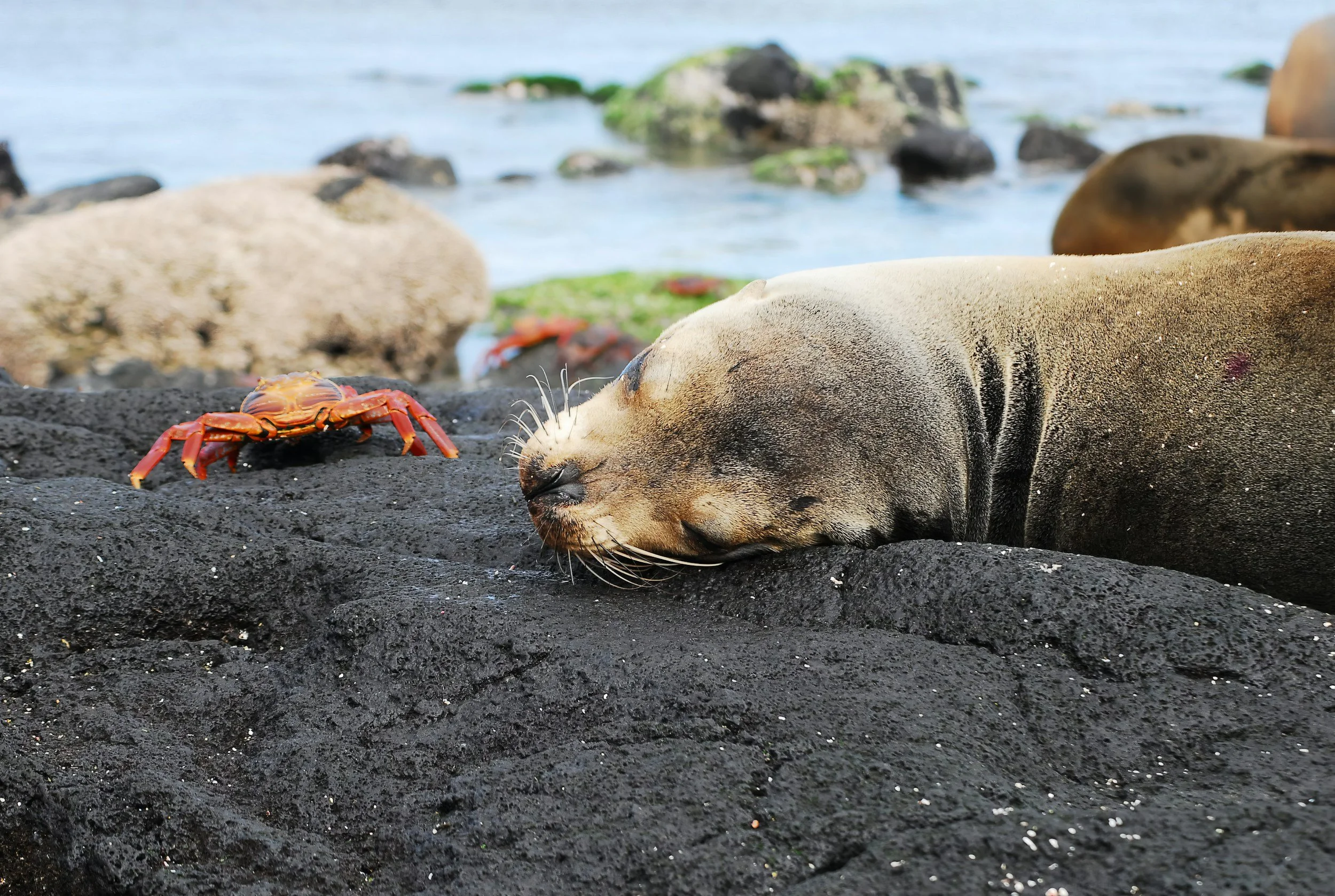
Schools of hammerhead sharks move like shadows in the distance. Sea lions dart past you mid-dive, playful and curious. And if timing is on your side, a whale shark—larger than your imagination—glides through the blue.
It’s the kind of diving that stays with you.
But here’s what most travelers don’t realize: how you experience the Galápagos matters just as much as going.
Liveaboard vs. Land-Based: Choosing Your Experience
The biggest decision you’ll make is whether to explore the islands by liveaboard or from land.
For serious divers, liveaboards are where the magic happens. They give you access to Wolf and Darwin Islands—remote sites known for massive schools of hammerheads and some of the most thrilling diving on the planet. You’ll dive multiple times a day and spend your trip fully immersed in the experience.
Land-based trips, on the other hand, offer a different kind of balance. You’ll stay in beautiful lodges, explore the islands above water, and still enjoy excellent diving—but without the intensity of a full dive schedule. For many couples or first-time visitors, this is the ideal introduction.
What Most People Overlook: The Logistics
The Galápagos is one of the most protected ecosystems in the world—and that comes with structure.
There are park fees, transit cards, regulated itineraries, and strict environmental guidelines. Liveaboards book out far in advance, and the best vessels are often secured a year ahead.
It’s not complicated—but it does need to be done correctly. And this is where working with a travel advisor comes in. We coordinate the logistics with our partners on the ground so it’s one less thing for you to worry about pre-trip.
Adventure, With Comfort
One of the biggest misconceptions about the Galápagos is that you have to “rough it.”
In reality, there are exceptional options that combine expedition-level access with thoughtful comfort—whether that’s a well-appointed liveaboard with chef-prepared meals or a boutique lodge with private excursions.
When to Go
The Galapagos is a year-round dive destination, but each season brings its own set of marine life and dive conditions, some better suited to more advanced divers.
January - March: Hammerheads and manta ray sightings, expect moderate currents and great visibility
April - June: Manta Ray season, expect stronger currents around Wolf and Darwin island better for advanced divers
July - September: Whale Shark encounters (peak season is June - November), cooler water temperature and visibility drops to 15-20 meters
October - December: Water temperature rises and visibility starts to improve. Expect to see whale sharks, as well as sea lions, turtles and hammerheads
Doing the Galápagos Right
The Galápagos is not a trip you want to “figure out as you go.”
It’s a destination that rewards thoughtful planning—choosing the right boat, the right season, and the right balance of adventure and comfort.
Do it well, and it becomes one of those rare trips that quietly redefines what travel can be.
Curious about planning your own trip to the Galapagos?